
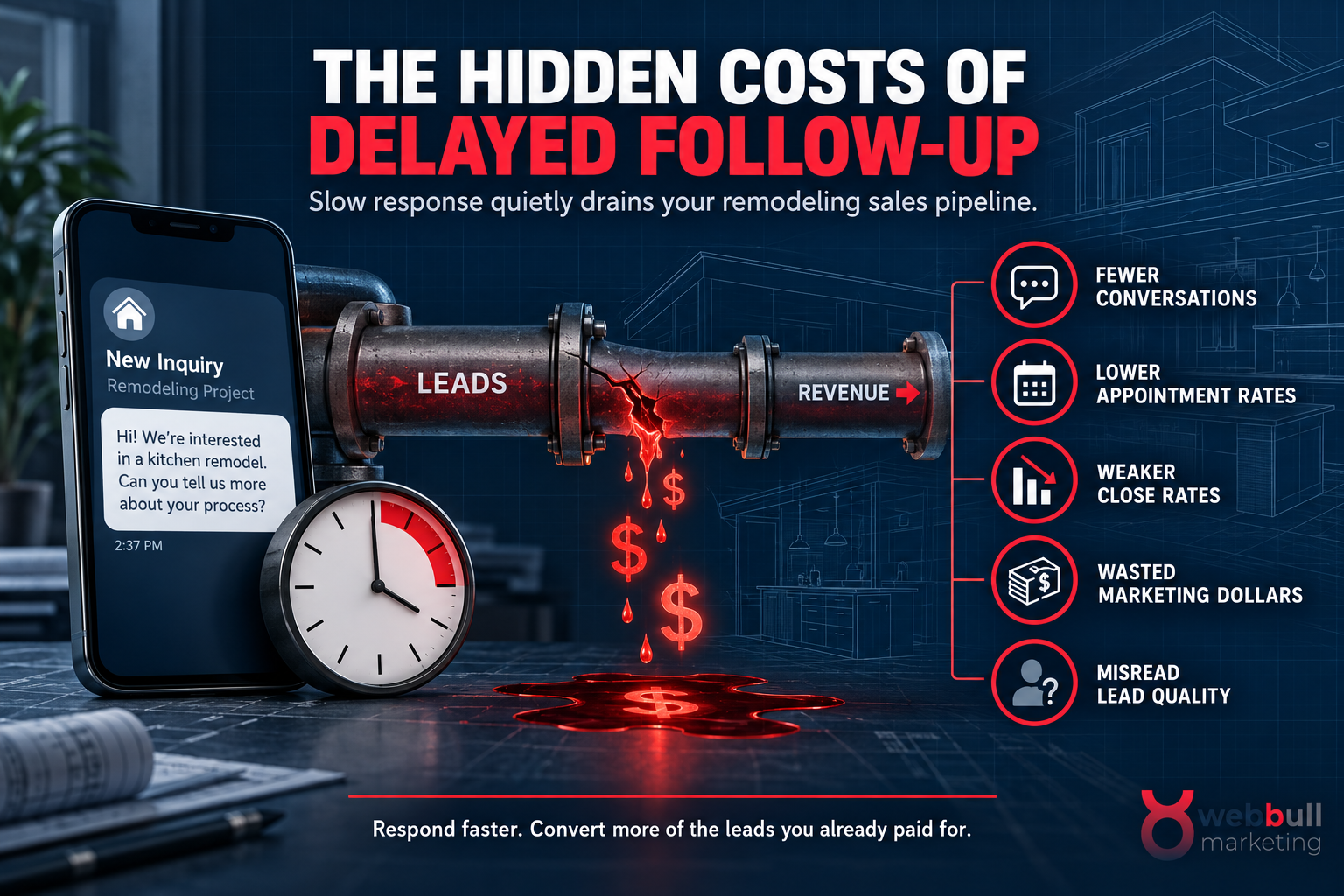
A homeowner requests a consultation at 2:17 p.m. Your estimator is at a jobsite. Your office manager is handling a change order. Someone plans to call the lead back later, but later becomes tomorrow morning.
By then, the homeowner may have spoken with two other remodelers, booked a consultation, or decided your company is too busy to handle the project. You technically followed up. You were simply too late for your response to matter.
For remodelers and design-build firms, delayed follow-up is not a small customer-service problem. It is a pipeline problem that quietly reduces appointments, weakens close rates, wastes marketing spend, and makes good leads look less valuable than they really are.
Why Remodeling Lead Follow Up Matters So Much
A remodeling inquiry is usually made during a short window of active interest. The homeowner has started researching options, thinking about budget, and deciding whom to trust inside the home. They may submit several forms during the same sitting.
The first company to respond gains more than a scheduling advantage. It gets the first chance to frame the conversation, explain the process, establish credibility, and help the homeowner understand what happens next. Every hour of silence gives a competitor that opportunity instead.
Fast does not mean pushy. It means acknowledging the inquiry while the project is still top of mind and making the next step easy.
What Slow Follow Up Looks Like in a Remodeling Company
Most follow-up failures do not look dramatic from inside the business. They look normal:
- A website inquiry arrives while the team is in a production meeting.
- A missed call goes to a shared voicemail box no one owns.
- A Facebook or Google lead notification gets buried in email.
- An evening inquiry waits until late the following morning.
- One person assumes someone else already responded.
- A salesperson makes one call, leaves no message, and moves on.
Each delay seems harmless in isolation. Across a month of paid search, SEO, referrals, and social media leads, those small gaps become a substantial revenue leak.
The Five Hidden Costs of Delayed Follow Up
1 Fewer Conversations With Qualified Homeowners
The immediate cost is contact rate. A lead who was available and motivated when the form was submitted may be unavailable, distracted, or already committed to another consultation when your call finally arrives. You cannot qualify a homeowner you never reach.
2 Lower Appointment Rates
A homeowner who speaks with another remodeler first has already started forming expectations about scope, timing, price, and process. Your team enters the conversation from behind, even if your portfolio and service are stronger.
3 Lower Close Rates Later in the Funnel
Delayed response can damage the sale long before the proposal is presented. The prospect may interpret silence as poor communication, limited capacity, or a preview of how the project will be managed. In remodeling, where trust and responsiveness are part of the product, that perception matters.
4 Wasted Marketing Dollars
You paid to create the opportunity through advertising, SEO, referral partnerships, content, or brand-building. If the lead sits untouched, the company is paying for demand it is not operationally prepared to capture. Buying more leads will not repair a slow response system; it will only pour more money into the leak.
5 Misleading Decisions About Lead Quality
When leads do not answer after a delayed response, teams often conclude that the campaign produced bad prospects. Sometimes the lead source is the problem. Sometimes the real issue is that the opportunity cooled before anyone made contact. Without tracking response time, the company cannot tell the difference.
How to Estimate the Revenue at Risk
Use your own numbers to make the problem visible. Start with five inputs: monthly leads, contact rate, qualified-to-appointment rate, close rate, and average project revenue.
For example, imagine a remodeler receives 40 leads per month, reaches 60 percent of them, books appointments with 50 percent of the qualified contacts, closes 25 percent of appointments, and averages $75,000 per project. Small improvements near the top of the funnel can produce another appointment or sale without increasing the advertising budget.
This is an illustration, not a promise. The point is to calculate the opportunity using your actual pipeline data rather than relying on a generic industry benchmark.
How Fast Should Remodelers Respond to Leads
Set a service-level target your team can consistently meet. A practical starting standard is:
- During business hours: acknowledge every new inquiry immediately with an automated confirmation and attempt personal contact within 15 to 30 minutes.
- After hours: send an immediate confirmation that explains when a person will respond, then place the lead first in the queue the next business morning.
- Missed calls: return them as quickly as possible and send a short text if the caller does not answer.
- Unreached leads: follow a planned multi-channel sequence instead of relying on one phone call.
If your current response time is measured in hours or days, do not wait for a perfect system. Establish ownership, alerts, and a measurable target first. Automation can support the process, but it cannot replace accountability.
A Simple Remodeling Lead Follow Up Process
Capture every lead in one place. Website forms, calls, chat, social ads, and referral inquiries should enter one visible pipeline. Leads scattered across inboxes are leads waiting to be forgotten.
Assign one owner. During each coverage period, one named person owns the first response. Shared responsibility often becomes no responsibility.
Send immediate confirmation. Tell the homeowner the inquiry was received, identify the next step, and set an honest expectation for personal contact.
Make the first personal attempt. Call while the project is still top of mind. If there is no answer, leave a concise voicemail and send a helpful text.
Use a short follow-up sequence. Continue with a measured combination of phone, text, and email over several business days. Each message should make responding easy and add context, not repeat the same generic check-in.
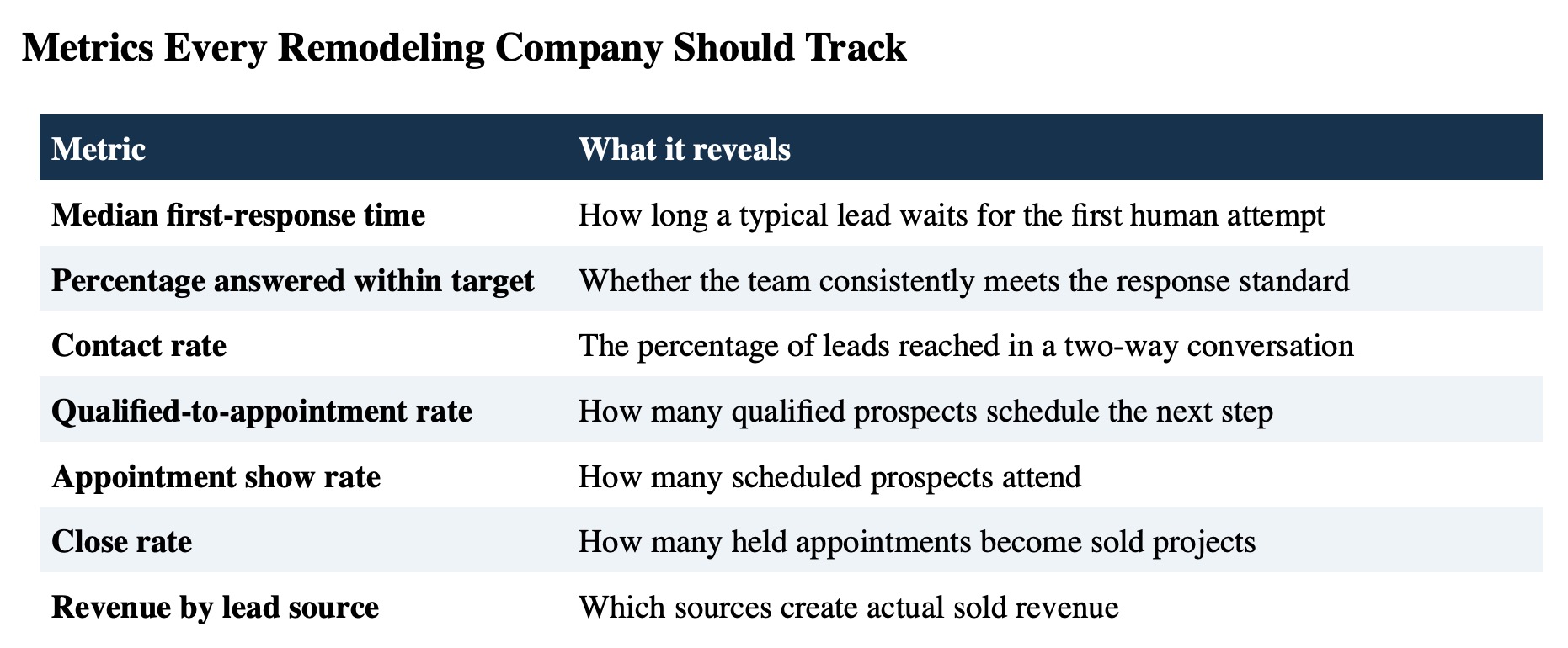
Track the outcome. Record first-response time, contact status, qualification result, appointment status, and reason lost. Data turns follow-up from a vague expectation into a manageable system.
What to Say in the First Response
Keep the first message human, specific, and easy to answer. The goal is not to sell the entire project by text. The goal is to start a useful conversation.
Example text message
Hi [First Name], this is [Name] with [Company]. I just received your request about your [kitchen, bathroom, addition, or other project]. I would love to learn a little more and explain our process. Is now a good time for a quick call, or would later today be better?
For after-hours inquiries
Hi [First Name], thank you for contacting [Company] about your remodeling project. We received your request and will personally follow up by [specific time]. If you would like, reply with the type of project and your ideal timeline so we can come prepared.
Common Follow Up Mistakes
- Measuring time to automated email instead of time to a meaningful human response.
- Calling once and marking the lead unresponsive.
- Sending generic messages that do not mention the homeowner's project.
- Failing to define who covers leads during meetings, jobsites, lunches, and vacations.
- Chasing every inquiry without basic qualification criteria.
- Adding more software before fixing ownership and process.
Fast Follow Up Is a Competitive Advantage You Already Own
Remodeling companies often look for a new lead source when the fastest growth opportunity is already sitting inside the existing pipeline. Improving response time helps the business create more conversations and appointments from leads it has already paid to generate.
Speed alone will not rescue poor positioning, weak qualification, or an inconsistent sales process. But when the rest of the experience is strong, prompt and professional follow-up is one of the simplest ways to protect marketing spend and win more of the right projects.
Start by measuring your current median response time for the last 30 days. Then assign one owner, set a realistic response target, create an after-hours message, and review the numbers weekly. What gets measured gets managed. What sits in an inbox usually gets hired by somebody else.
Frequently Asked Questions
How quickly should a remodeling company respond to a new lead
During business hours, aim to acknowledge the inquiry immediately and make a personal contact attempt within 15 to 30 minutes when staffing allows. The best target is one your team can measure and meet consistently.
Should remodelers text new leads
Yes, when the prospect has provided a mobile number and your process follows applicable consent and messaging requirements. A short text can identify the company, confirm the request, and offer a convenient time to talk.
How many times should a contractor follow up
Use a defined sequence across phone, text, and email rather than one attempt. The exact cadence should match the lead source, consent, project value, and your market. Stop when the prospect opts out or indicates they are not interested.
Can automation improve remodeling lead response time
Yes. Automation can send confirmations, alert the assigned salesperson, create tasks, and prevent leads from being lost. It works best as support for a human-owned process.
What is the most important lead follow-up metric
Start with median time to first human response and the percentage of leads contacted within your target. Then compare those numbers with contact and appointment rates.